
Endoscopic Spine Surgery.
“Minimally invasive, maximally effective”

Two weeks after endoscopic removal of a disc herniation
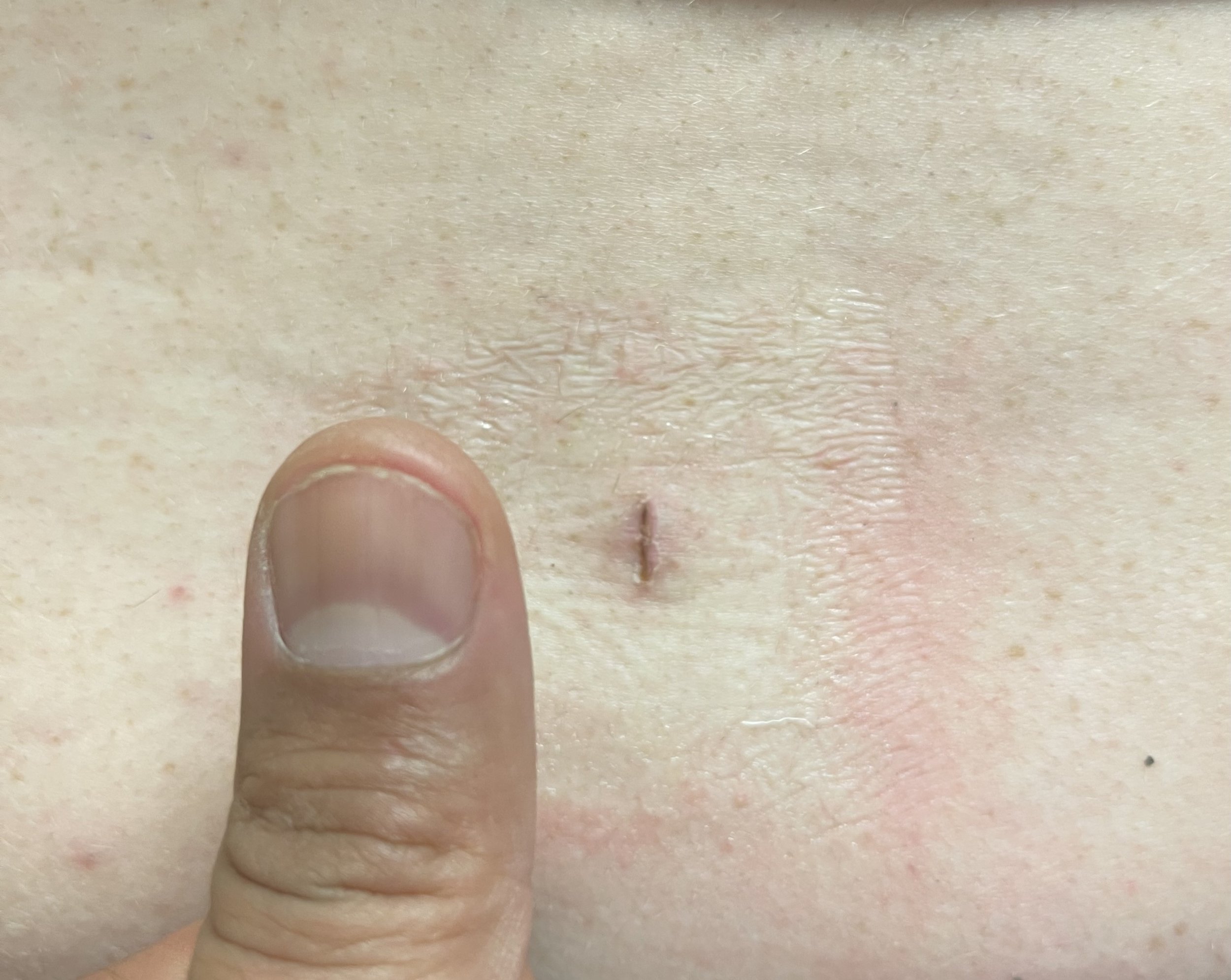
Healed incision less than 1 centimeter

What it is.
Endoscopic spine surgery is performed under the visualization of a camera using a single portal through incisions less than 1 cm in length. Often termed “ultra” minimally invasive, endoscopic spine surgery minimizes tissue disruption unlike conventional open spine surgeries.
Endoscopic spine surgery can treat spine disorders such as:
herniations
facet arthropathy
facet cysts
spinal stenosis
radiculopathy

Why endoscopic spine surgery?
For appropriately selected patients, endoscopic spine surgery may allow outpatient treatment, smaller incisions and less tissue disruption than traditional approaches.
Not every condition can or should be treated endoscopically. Dr. Molina will review your imaging, symptoms and examination to determine which treatment is appropriate.
Endoscopic spine surgery is motion sparing surgery. Often times spinal disease is in an area of the spine that when accessed by conventional spine procedures, is only amenable to fusion.
Endoscopic spine surgery may provide access to these hard to reach areas and eliminate the need for fusion.